Crab Apple Jelly Recipe
Introduction
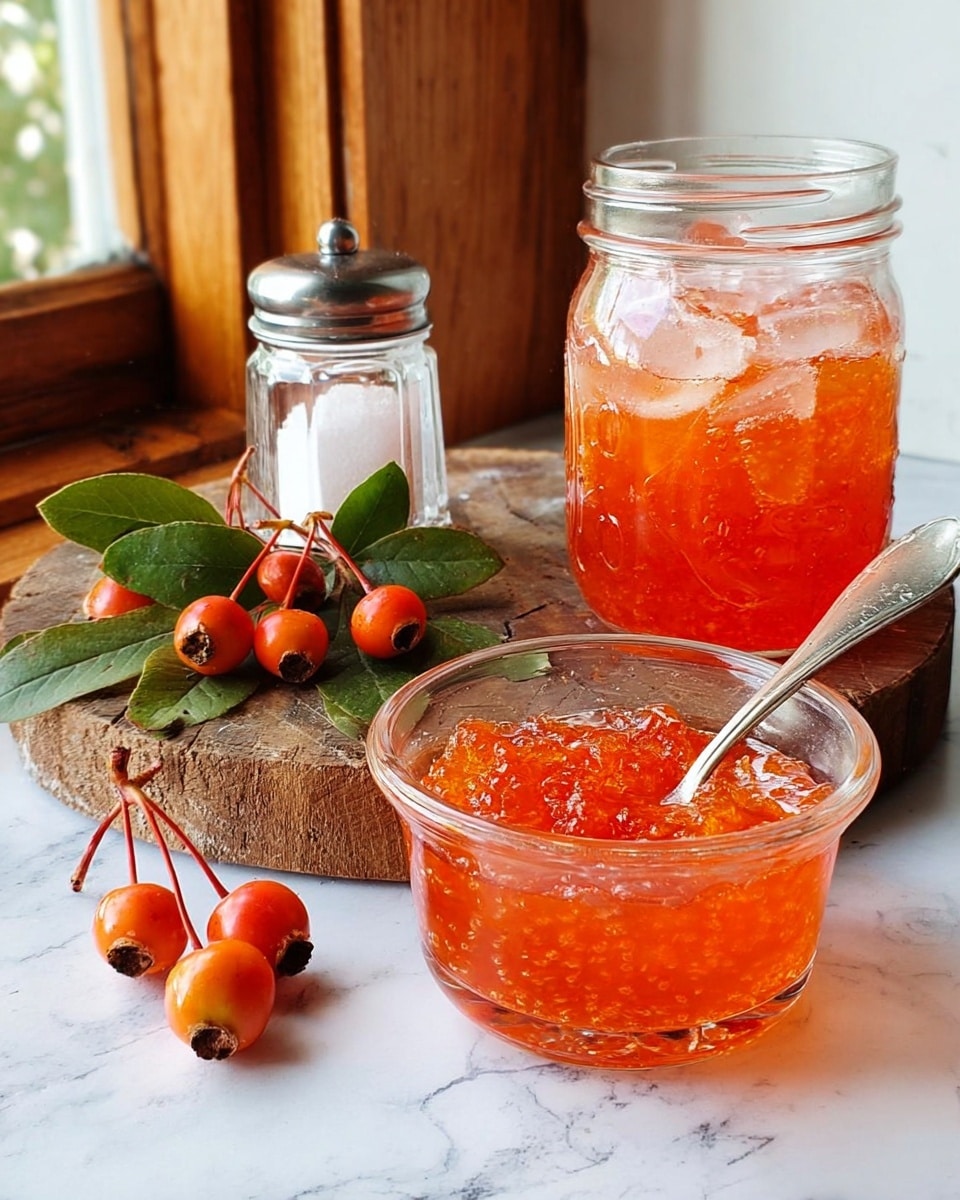
Crab apple jelly is a beautifully clear and tangy preserve that captures the unique tartness of crab apples. It’s perfect for spreading on toast or serving alongside cheese. This recipe guides you through making a smooth, flavorful jelly that’s a wonderful addition to your pantry.
Ingredients
- 1½ kg crab apples
- 1 lemon, zest pared and half juiced
- around 450g white caster or granulated sugar
- water (equal quantity to crab apples)
Instructions
- Step 1: Wash and drain the crab apples, then cut them in half and place in a large heavy-based saucepan. Add an equal quantity of water and the pared lemon zest.
- Step 2: Bring to the boil, then reduce the heat and simmer for 20-25 minutes until the apples become pulpy. Stir occasionally with the back of a wooden spoon to help break down the fruit.
- Step 3: Remove from the heat and allow to cool slightly. Place the fruit pulp in a jelly bag and let the juice drip through into a large bowl. This may take several hours or overnight for best results. Avoid pressing the pulp to keep the jelly clear.
- Step 4: Put two small sterilised saucers in the freezer for testing the setting point later.
- Step 5: Weigh the collected juice and return it to a large saucepan. Add three quarters of the juice weight in sugar (for example, 300g sugar to 400g juice) along with the juice from half a lemon.
- Step 6: Stir over medium heat until the sugar is completely dissolved. Increase the heat and boil the mixture hard for about 8 minutes, skimming off any scum.
- Step 7: Test the setting point by placing a teaspoon of the jelly on one of the chilled saucers. After a minute, push your finger through it. If it wrinkles, the jelly is ready; if not, boil for another minute and test again.
- Step 8: Pour the hot jelly into sterilised jars and allow to cool completely before sealing. Store in a cool, dark place.
Tips & Variations
- Using a jelly bag and letting the juice drip naturally ensures a clear jelly without any cloudiness.
- For a slightly sweeter jelly, increase the sugar to equal weight of the juice.
- Adding a small cinnamon stick or a few cloves during simmering gives a spiced variation.
- Always sterilise jars properly to keep your jelly fresh for longer.
Storage
Store crab apple jelly in sterilised, airtight jars in a cool, dark place. Properly sealed, it will keep for up to a year. Once opened, keep refrigerated and consume within a few weeks. Reheat gently if you want to soften the jelly before serving.
How to Serve
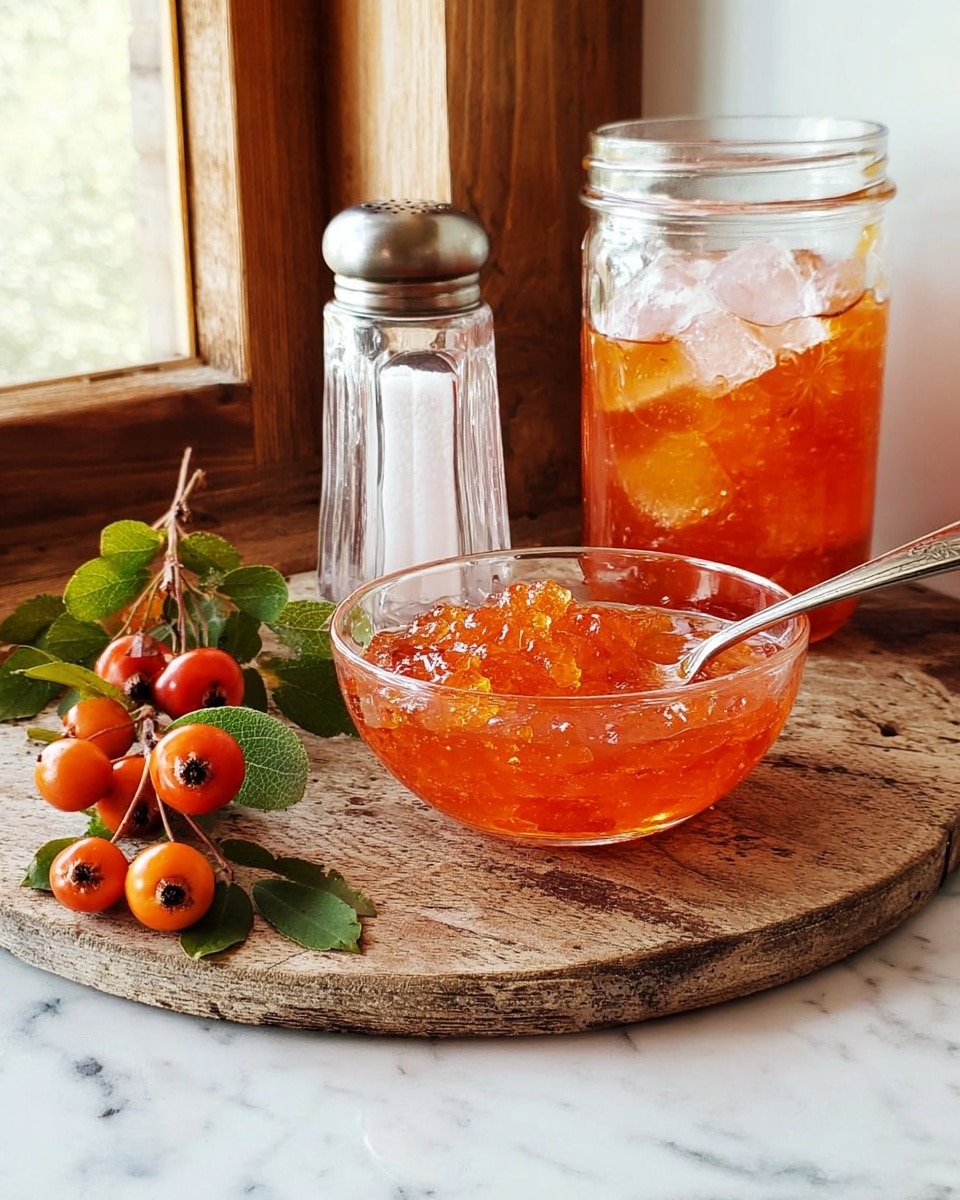
Serve this delicious recipe with your favorite sides.
FAQs
Can I use regular apples instead of crab apples for this jelly?
Regular apples have less pectin and a milder flavor, so the jelly may not set as firmly and won’t have the characteristic tartness of crab apple jelly. It’s best to use crab apples or add commercial pectin if substituting.
Why is my jelly cloudy or doesn’t set properly?
Cloudiness often results from pressing the pulp too hard when extracting juice. To avoid this, let the juice drip naturally through a jelly bag. For setting issues, ensure you boil the jelly to the correct temperature and use the right sugar ratio.
Print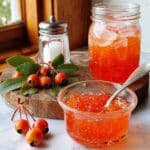
Crab Apple Jelly Recipe
- Total Time: overnight plus 45 minutes
- Yield: approximately 4 jars (250ml each) 1x
- Diet: Vegetarian
Description
This Crab Apple Jelly recipe transforms tart crab apples into a clear, delicate jelly that’s perfect for spreading on toast or serving with cheese. The jelly is made by simmering crab apples with lemon zest and juice, extracting their juice overnight, and then boiling it with sugar to the perfect setting point.
Ingredients
Fruit and Juice
- 1½ kg crab apples
- 1 lemon, zest pared and half juiced
Sweetener
- around 450g white caster or granulated sugar (3/4 the weight of the extracted juice)
Other
- Water (equal quantity to crab apples by weight)
- Jelly bag
Instructions
- Prepare the fruit: Wash and drain the crab apples, then cut them in half. Place them in a large, heavy-based saucepan along with an equal weight of water and the pared lemon zest.
- Cook the fruit: Bring the mixture to a boil, then reduce the heat and simmer for 20-25 minutes until the apples are soft and pulpy. Stir occasionally using the back of a wooden spoon to help break down the fruit further.
- Extract the juice: Remove the pan from heat and let it cool slightly. Transfer the pulp to a jelly bag and allow the juice to drip into a large bowl. This can take several hours, ideally overnight, to ensure a clear juice without any forced pulp that would make the jelly cloudy.
- Prepare for setting test: Sterilize two small saucers by washing them in hot soapy water, rinsing, and placing them in an oven at 180°C (160°C fan/gas mark 4) for 5 minutes. Remove and cool these as they will be used to test the jelly’s setting point.
- Weigh the juice and add sugar: Weigh the clear fruit juice and return it to a large saucepan. Add three-quarters of the juice weight in sugar (e.g., 300g of sugar for 400g of juice). Add the juice from half a lemon as well.
- Dissolve the sugar and boil: Heat the mixture over medium heat, stirring constantly until all the sugar dissolves. Then, increase the heat and bring it to a rolling boil. Continue boiling hard for about 8 minutes, stirring occasionally and removing any scum that forms.
- Test the setting point: Use a thermometer and look for 105°C. Alternatively, place a teaspoon of jelly on one of the chilled saucers, let it sit for a minute, then push your finger through. If the jelly wrinkles, it’s ready; if not, continue boiling and test again every minute.
- Jar and store: Once the jelly reaches the setting point, pour it carefully into sterilized jars. Allow it to cool completely before sealing the jars. Store in a cool, dark place for best preservation.
Notes
- Allowing the juice to drip through the jelly bag naturally is key to achieving a clear jelly; forcing the pulp will result in cloudiness.
- Testing the setting point using the chilled saucers is a traditional and reliable method if you do not have a thermometer.
- Sterilizing jars and equipment thoroughly before use helps to preserve the jelly and avoid spoilage.
- This jelly pairs beautifully with cheese or as a sweet spread on warm toast.
- Prep Time: 15 minutes
- Cook Time: 30 minutes
- Category: Condiment
- Method: Stovetop
- Cuisine: British
Keywords: Crab Apple Jelly, Homemade Jelly, Fruit Jelly, Preserves, Spread, British Recipe